Steward Chapel A.M.E. Church
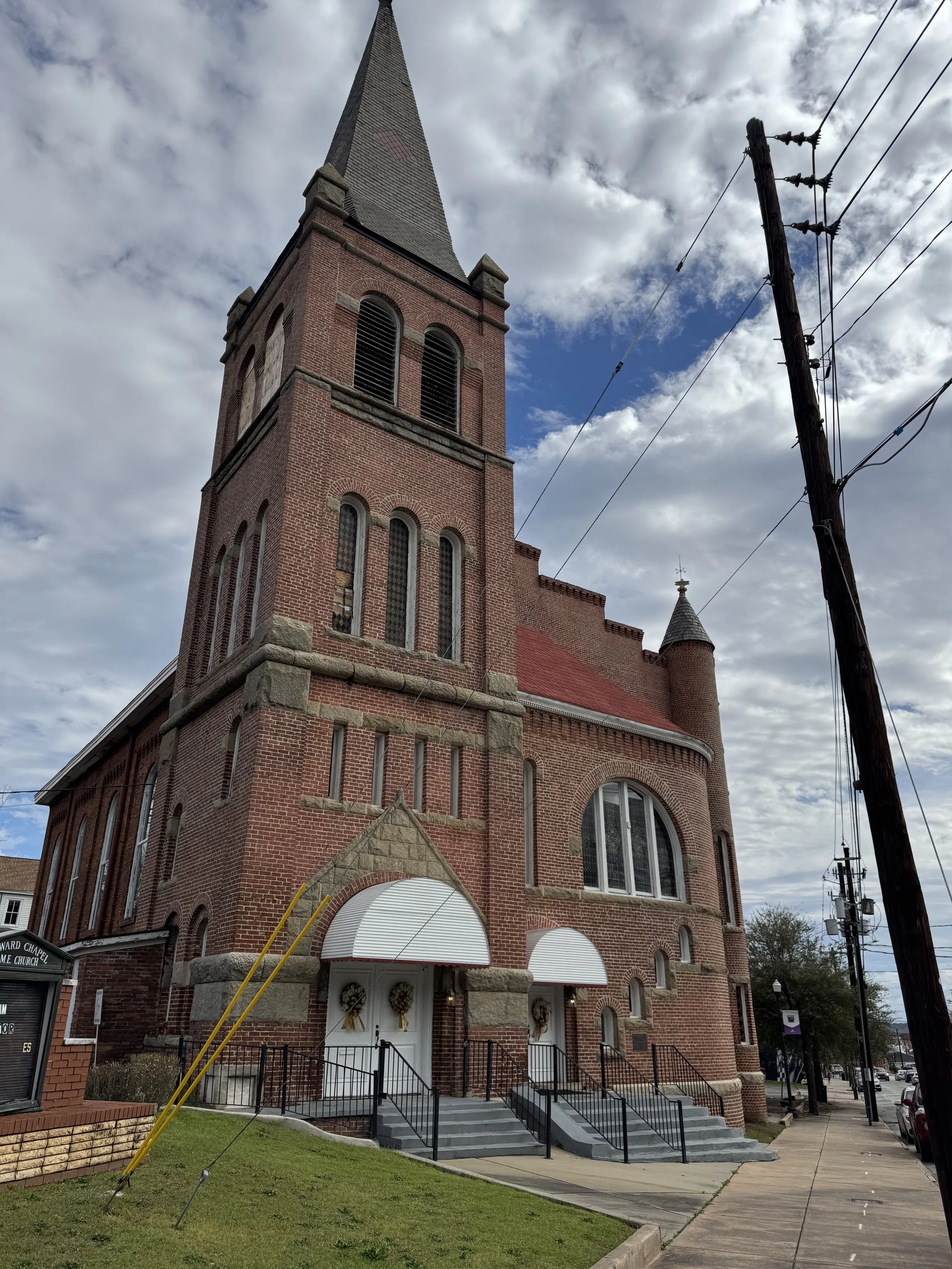
Steward Chapel A.M.E. Church is located at 887 Forsyth Street in Macon, Georgia.
This article originally appeared in the July 2026 issue of Connections, the newsletter of the Georgia African American Preservation Network.
What is now known as Steward Chapel A.M.E. Church was established in 1865. Shortly after its founding, it became the first African Methodist Episcopal (A.M.E.) Church in Macon, Georgia. On the 1884 Sanborn Fire and Insurance Maps, the structure is referred to as the "African M.E. Church."
Presently located at 887 Forsyth Street, Steward Chapel is in the Macon Historic District, which was added to the National Registry of Historic Places in 1974; the boundaries of the original district were expanded in 1995. The period of significance in the expanded district is 1823-1942. Despite its historical significance, the church was not individually listed in the original historic district and is not named as a contributing property. The district’s areas of significance include architecture, commerce, community planning and development, politics/government, landscape architecture, education, and transportation. Architecturally, Steward Chapel could be described as a late 19th to early 20th century ecclesiastical Romanesque Revival building with Gothic detailing.
The A.M.E. denomination, of which Steward Chapel is a part, is the first independent Protestant denomination for African Americans in the United States. It was founded in Philadelphia, Pennsylvania, in 1816 by Richard Allen in response to discrimination faced by African American congregants associated with the white Methodist Episcopal Church. Following the Civil War, the A.M.E. church expanded rapidly in the southeastern United States, and later internationally. William Gaines, ordained a deacon in the A.M.E. church in June 1865, visited Macon shortly thereafter and convinced the membership of the city’s black Methodist church to affiliate with the A.M.E. denomination, although the formal change did not take place until March 1866. Henry McNeal Turner, a native of South Carolina, was appointed the pastor of the A.M.E Church in Macon at the 2nd session of the South Carolina Annual Conference. The A.M.E. Church‘s first seed in Macon, established on the precipice of emancipation, is a prime example of the denomination’s expanded footprint in the South.
The original church structure was located at the corner of New and Pine Streets in downtown Macon. According to an article in Macon’s Weekly Messenger, an ownership dispute arose in the late 1860’s between the Black A.M.E. Church and the local white Methodist Episcopal Church. During the dispute, the original A.M.E. church building was burned down on February 25, 1869. The current church’s cornerstone reveals that it was rebuilt at the present site at 887 Forsyth Street (formerly Cotton Avenue) in 1872 under the leadership of Theophilus G. Steward, who later served as a Buffalo Soldier and Chaplain of the 25th U.S. Colored Infantry. Steward was appointed pastor in March 1868. During his three-year pastorate, he also served as the cashier at the Freedman’s Bank in Macon. The church was later renamed in his honor. While a pastor at the church, Steward tutored a young William Sanders Scarborough, who is widely considered the first Black classical scholar.
Since its inception, Steward Chapel has been a locus for educational, political, and social activities in the city. In the years following emancipation, the church was a hotbed for African American political activity, as evidenced by its esteemed members and leaders. When the Western Freedmen’s Aid Commission sought locations for schools for African Americans in mid-1865, Macon’s African Methodist Episcopal Church, along with Black Baptist and Presbyterian churches, made spaces in their buildings for what became known as Lincoln Free Schools 1-4. During Reconstruction, Henry McNeal Turner, Theophilus G. Steward’s immediate predecessor in pastoral leadership, was among the first thirty-three Black state legislators in Georgia. While in Macon, he served as the city’s first Black postmaster general and is noted in history as an early proponent of emigration to Africa by formerly enslaved African Americans.
Other notable early members include Jefferson Franklin Long, Ruth Hartley Mosley, and John Oliver Killens. Long was Georgia’s first African American congressman, the second African American sworn into the U.S. House of Representatives, and the first to speak on the floor. Mosley, a trustee and treasurer at Steward Chapel, was also a civil rights leader, one of the city’s first Black nurses, a businesswoman and philanthropist who left a sizable charitable trust at her 1975 death. Macon native Killens, the founding chair of the Harlem Writers Guild, and influential in the Black Arts Movement, was a member of Steward Chapel and was exposed to African American literature at an early age by way of his mother’s leadership role in the church’s Dunbar Literary Society.
Today Steward Chapel remains a beacon of light in the downtown Macon community. It is one of few surviving buildings located in Macon’s original Black business district.
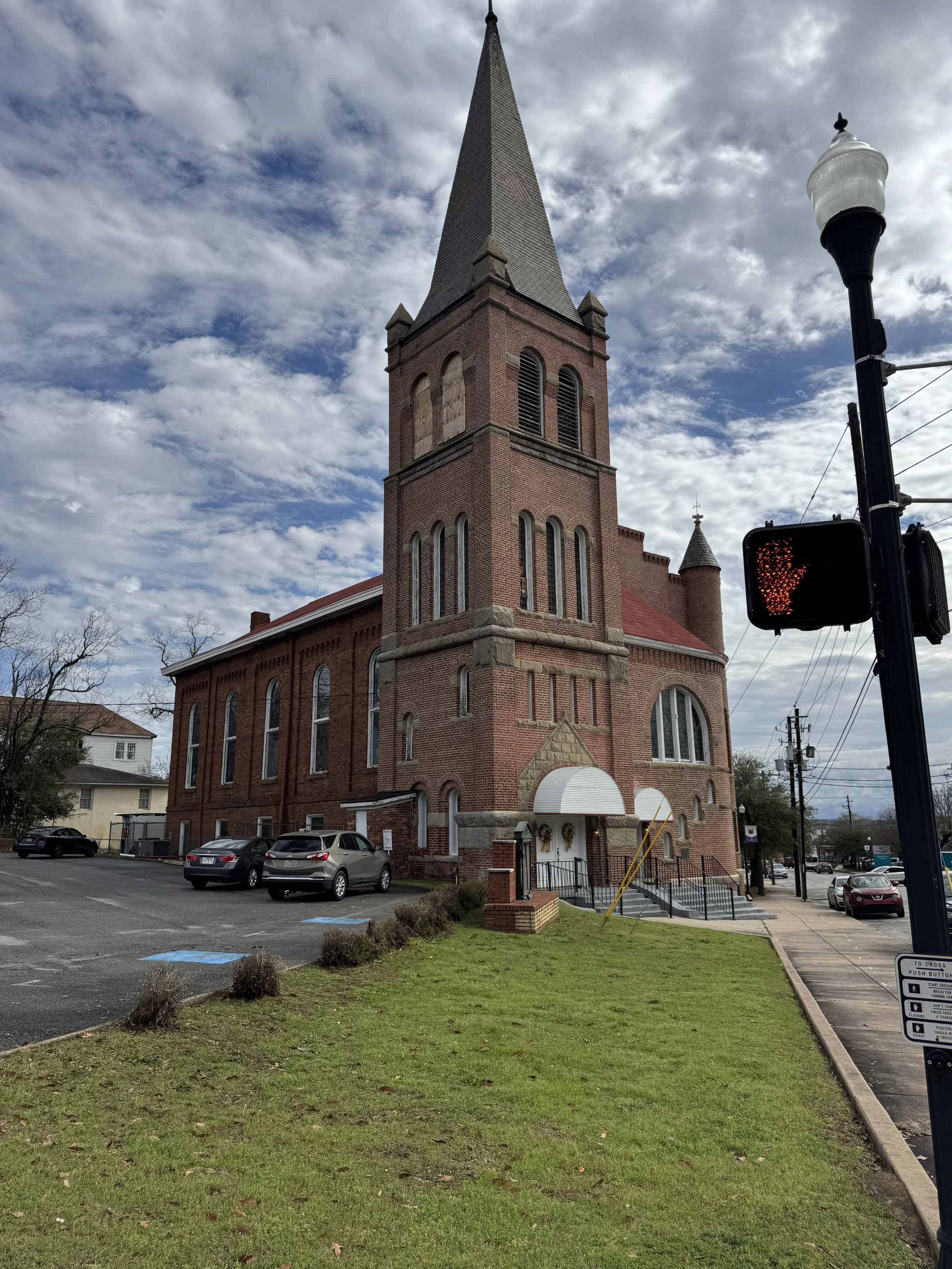
Steward Chapel A.M.E. Church 887 Forsyth Street, Macon, Georgia.